
AI-native infrastructure built for finance
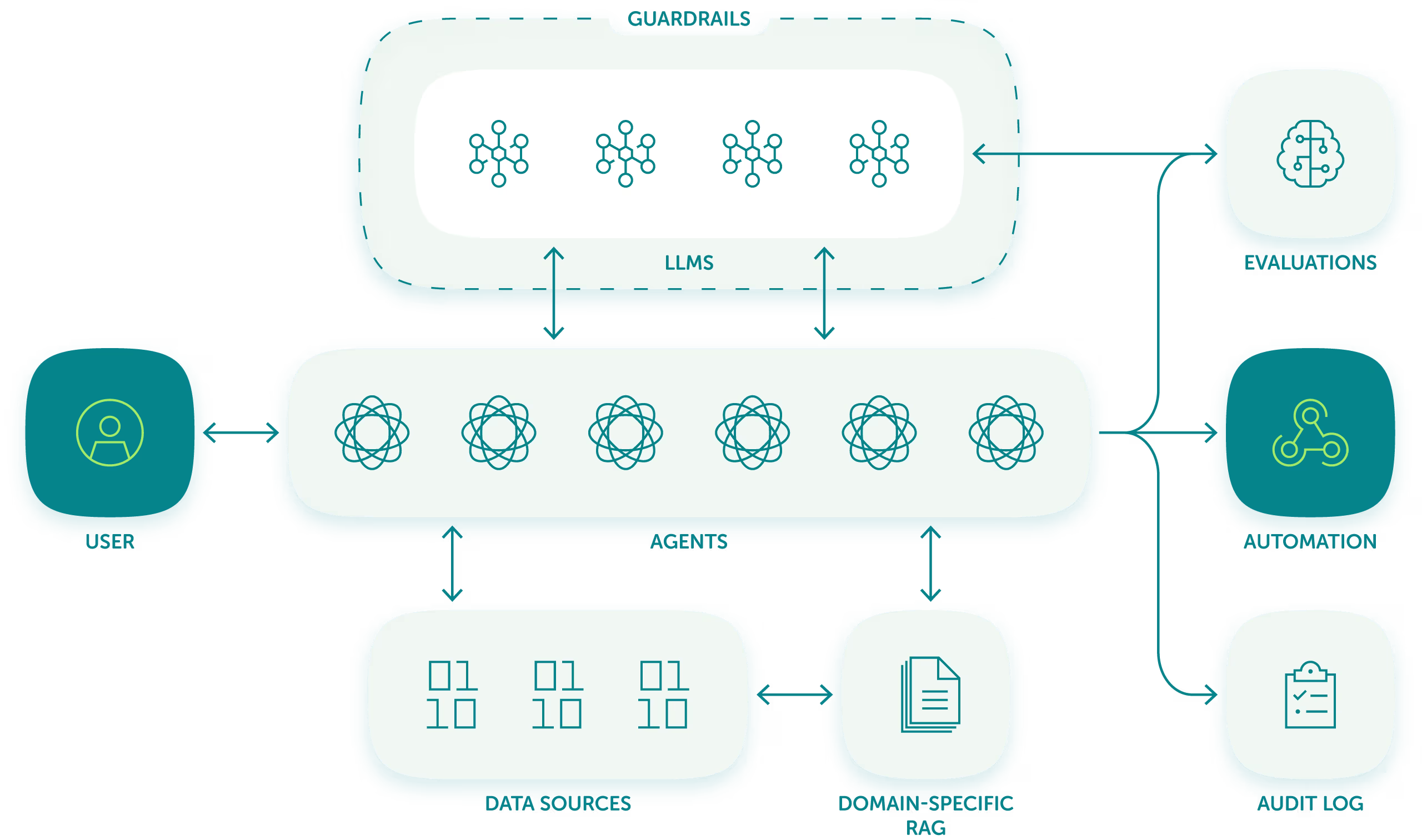

Large language model as operating system

Coordinates reasoning and action
Agents combine an LLM’s reasoning with your firm’s tools and data, understanding goals, planning multi-step workflows, and deciding what to do next.

Executes business logic through tools
Agents call internal systems, analytical tools, data services, and rule engines instead of relying on brittle hard-coded steps.

Maintains workflow state and context
The agent tracks what has been done, what remains, and what information is needed, enabling reliable, stateful automation across long, complex processes.

Adapts as conditions change
Agents handle exceptions, adjust to data differences, and escalate issues with the correct human context when needed.
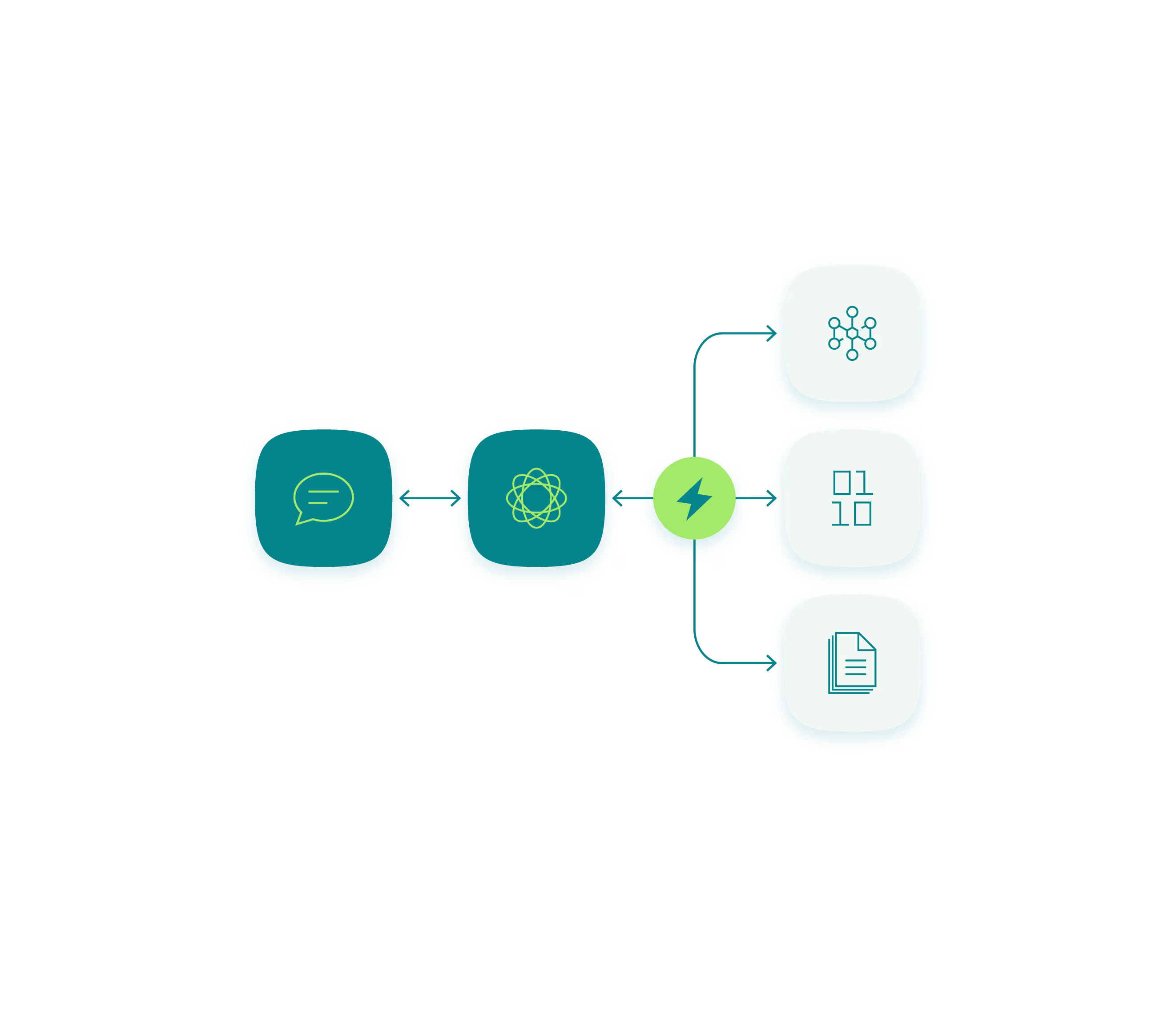
Context engineering

Deliver the right information at the right time
Agents perform best when given only the information that is relevant to the current decision. We curate task-specific context so the model stays focused instead of overwhelmed.

Integrate domain knowledge and internal systems
We connect to your data sources, workflows, and documents, structuring and translating them into the precise inputs an agent needs at each step.

Prevents context-window bloat
By filtering out noise and retrieving only authoritative facts, agents avoid irrelevant or conflicting details that weaken reasoning and slow execution.

Uses curated reference data and documentation
Agents rely on vetted regulatory guidance, firm-specific documentation, and structured reference data to ensure decisions are grounded, consistent, and aligned with your operational standards.
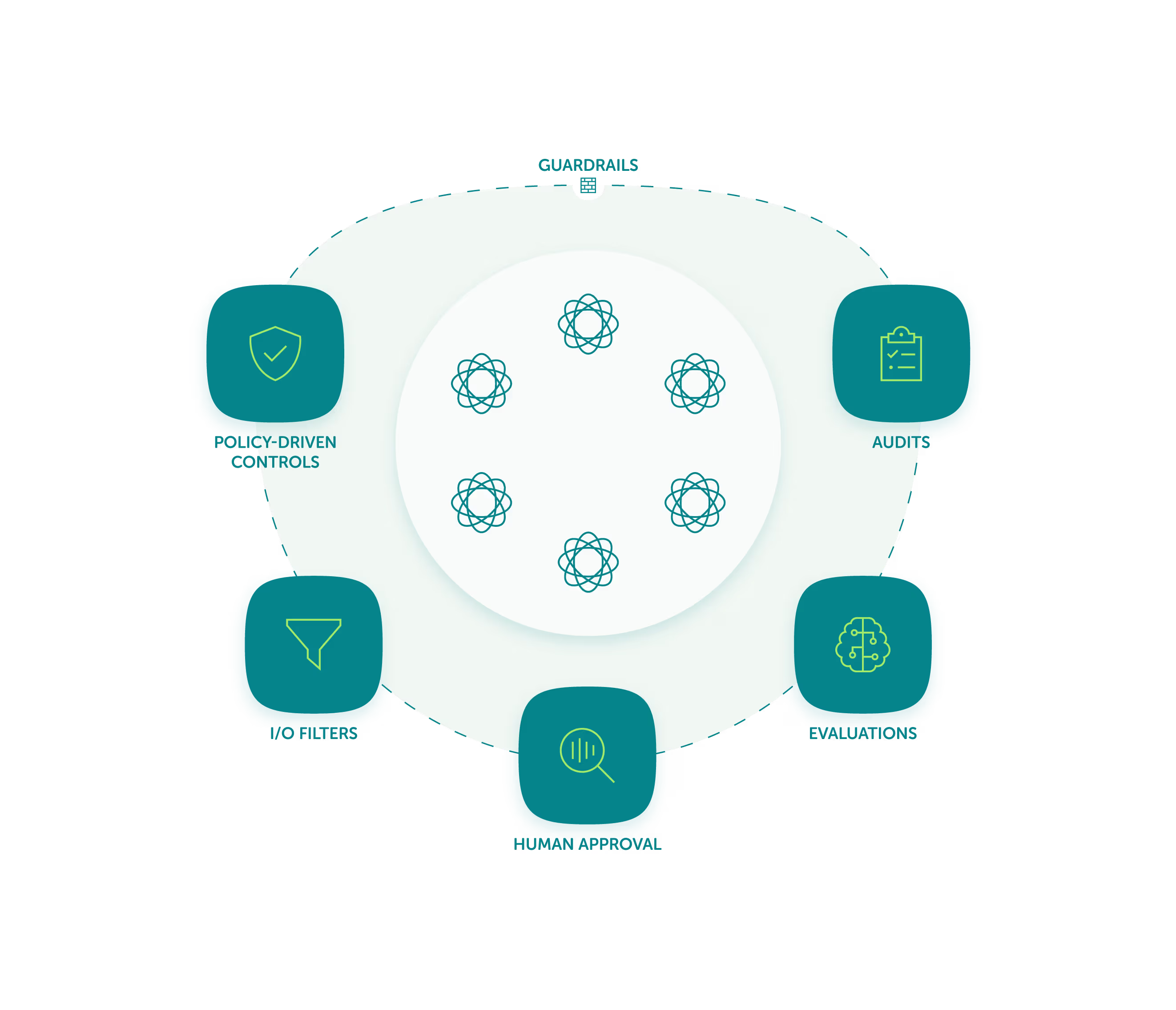
Robust guardrails

Policy-driven controls for safe execution
Agents operate within firm-defined policies that govern what they can access, what actions they can take, and how decisions are logged, ensuring compliant, auditable automation.

Protection against sensitive data exposure
Input and output filters automatically detect and block PII, confidential records, and other restricted information, preventing data leakage and enforcing regulatory boundaries.
Automated checks against regulatory and business rules
Validation layers review agent decisions, apply rule-based constraints, and flag anomalies early, reducing risk in high-stakes workflows.

Human approval for sensitive or high-risk steps
Teams stay fully in control: agents can draft, recommend, or prepare steps, but final execution requires explicit human approval where needed.
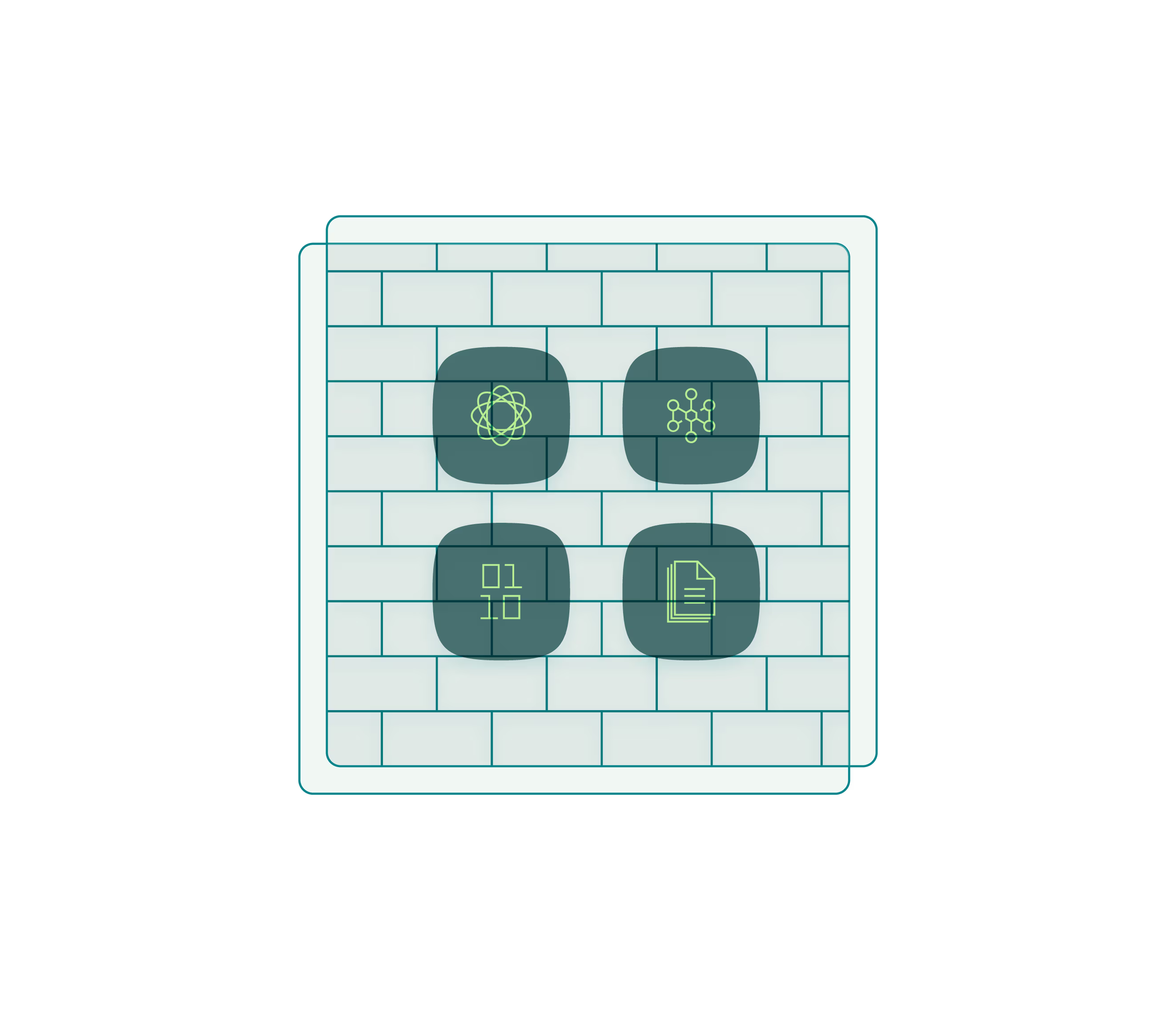
Secure and private

Isolated, single-tenant cloud environment
Each customer runs in its own dedicated, isolated deployment, ensuring data, infrastructure, and workloads are never shared across tenants.

Granular access controls
Role-based permissions and fine-grained policies determine exactly what each agent can access, invoke, or view, maintaining strict internal boundaries.

Secure integration with internal systems
Agents connect through hardened APIs, private networking, and controlled service accounts, ensuring data never leaves approved environments.

Designed for financial-grade privacy
Built-in safeguards prevent data leakage, enforce retention policies, and keep internal and client information fully isolated.
Transparent and auditable

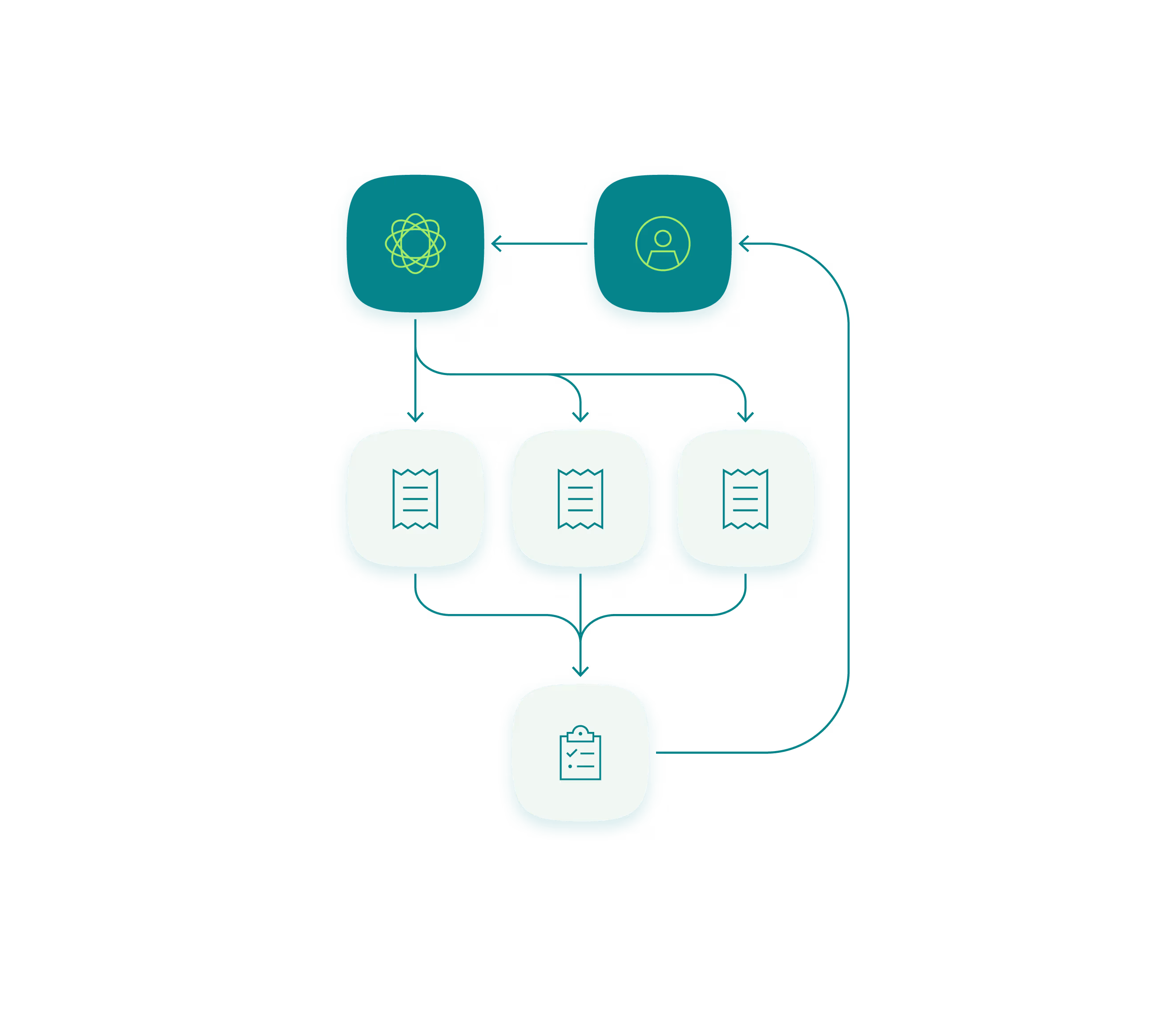
Complete, step-by-step traceability
Every agent action is logged in detail, including intermediate reasoning steps, tool calls, data retrieved, and outputs produced, giving you full visibility into how results were generated.

Comprehensive audit trails
All interactions are versioned and retained, creating an immutable record that supports regulatory audits, internal oversight, and post-hoc reviews.

Documented inputs for every decision
Prompts, tool-call details, and data references are captured for every step, giving teams clarity into how decisions were made without duplicating sensitive information.
Explainable and reviewable by design
Compliance and operations teams can replay an agent’s reasoning, inspect decision paths, and approve or reject steps, ensuring humans stay in control of critical workflows.
Continuous monitoring and evaluation
Built-in evaluation frameworks
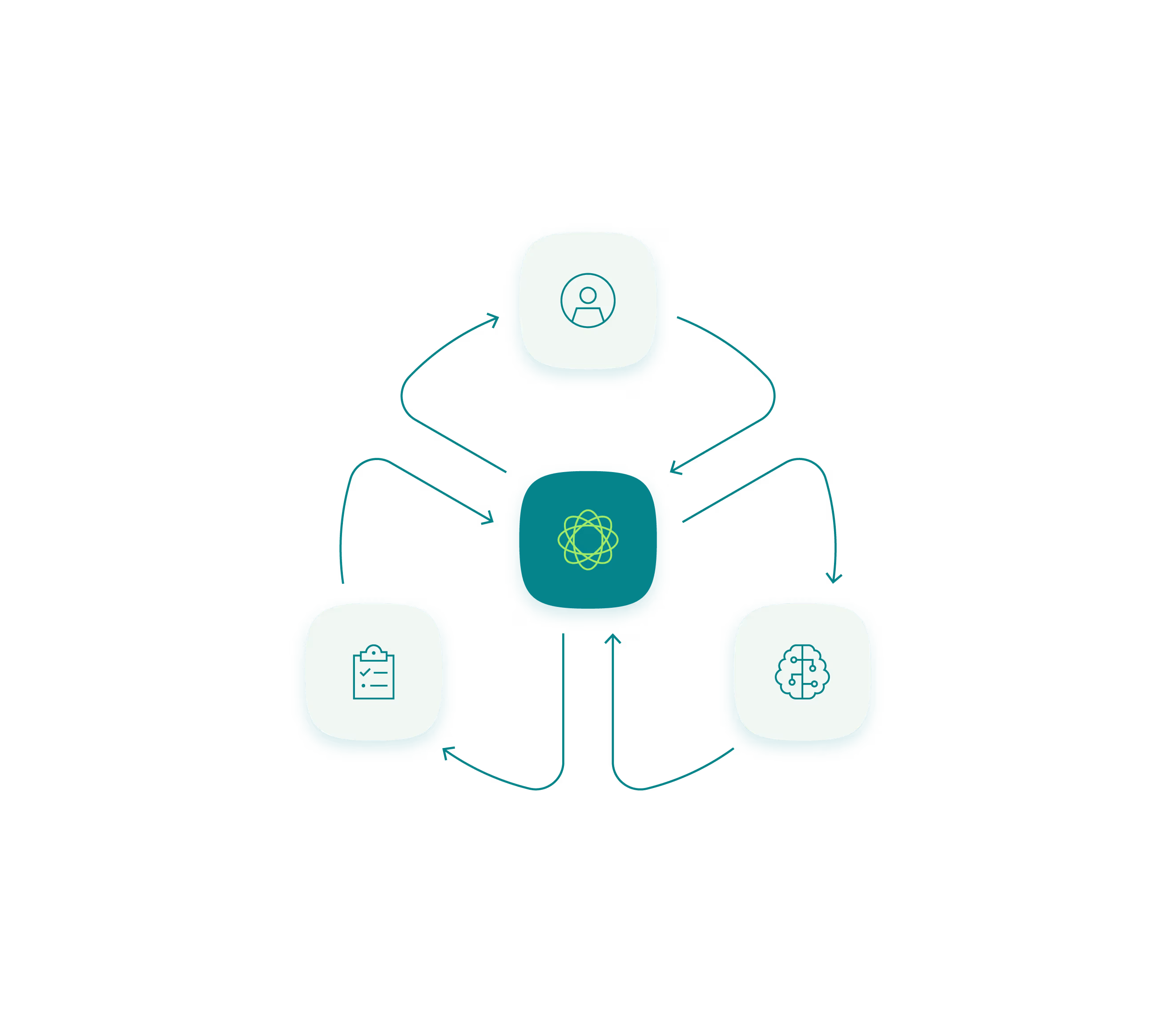
So-called evals are test suites that measure whether agents still behave correctly as models update or underlying data shifts, ensuring stability over time.

Human-in-the-loop oversight
Teams can review outputs, provide feedback, and approve sensitive steps, creating a continuous feedback loop that improves reliability and aligns agents with firm policies.

Ongoing performance monitoring
We track drift, unexpected behaviors, and edge-case failures, automatically surfacing issues for investigation before they impact live processes.

Interactive and autonomous agents

Chat-driven workflows
Teams can trigger agents directly through a chat interface with natural language.
Background automation
Agents can also run automatically based on schedules or triggered by events.

Human-in-the-loop when needed
Agents can request approval, surface intermediate results, or pause for human decisions at critical steps.

Accessible to every team
All teams can use the system without coding, through chat, dashboards, or automated triggers.
Discover what AI agents can do for your operations


Agent-powered AI for modern finance.